Christopher Nolan’s “The Odyssey,” a new adaptation of Homer’s epic tale of Odysseus’ perilous journey home after the Trojan War, is already being described as a case study in post-traumatic stress disorder.
But even more so, actor Matt Damon’s tortured and broken portrayal of Odysseus offers a look into what psychologists call moral injury.
According to The Moral Injury Project at Syracuse University, moral injury is “the damage done to one’s conscience or moral compass when a person perpetrates, witnesses or fails to prevent acts that transgress one’s own moral beliefs, values, or ethical codes of conduct.” Three clusters of experiences mark moral injury: spiritual or existential collapse; guilt and shame; and alienation from other people.
Homer’s works have long been heralded for highlighting the physical and psychological wounds of war. Yet director Christopher Nolan, far more than Homer, goes on to plumb Odysseus’ existential collapse, shame and guilt.
An invisible wound
I’m a PTSD researcher and clinician who has worked at four Veterans Affairs hospitals, and I’ve long taught my students that Homer’s epics contain some of the oldest written examples of PTSD symptoms, even though the formal diagnosis of PTSD did not exist until 1980.
Moral injury is not simply another name for PTSD, although the two often travel together.
PTSD is a fear-based disorder characterized by reexperiencing past trauma, avoidance of anything that triggers memories of that trauma, negative changes in mood and thought, and being constantly on guard.
Not everyone with PTSD experiences moral injury, and not all types of moral injury induce PTSD. But the two can overlap, particularly when someone violates their deeply held moral beliefs in a way that’s connected to a profound sense of guilt or shame.
In his books “Achilles in Vietnam” and “Odysseus in America,” psychiatrist Jonathan Shay explored moral injury in the context of the Vietnam War.
Shay focused on the American military institutions and leaders who undermined the trust and ideals of their soldiers through unclear goals and unjust orders. His exploration of moral injury is important. But it emphasizes the psychological consequences for soldiers when they’re betrayed in high-stakes situations. A more expansive view of moral injury, advanced by psychologist Brett Litz, shows it can also result from an individual’s own actions – what’s known as perpetration-based moral injury.
Released in 1989, the critically acclaimed movie “Born on the Fourth of July,” which is based on Ron Kovic’s 1976 autobiography, centers on this type of moral injury.
Kovic, played by Tom Cruise, is haunted by acts he committed while fighting in Vietnam. In a friendly fire incident, he accidentally kills a fellow Marine during a chaotic firefight. Later, he witnesses and participates in an attack in which his unit kills Vietnamese civilians, including women and children.
Moral injury in ‘The Odyssey’
Kovic’s actions and ensuing trauma reflect the same kind of moral injury seen in Damon’s Odysseus.
After 10 long years of fighting the Trojan War, Odysseus devises a plan to end the conflict: He and his troops infiltrate Troy by hiding inside a massive wooden horse. They build it as an apparent peace offering, climb inside and wait until their enemies pull “the gift” inside the city walls. Then they attack.
The military maneuver is brilliant and effective. But it also requires Odysseus to break Zeus’ law of xenia: the sacred obligation of hospitality between host and guest. He crosses another moral boundary by using deception. During the ensuing massacre, he violates the principle – even between enemies – of treating others how you would want to be treated.
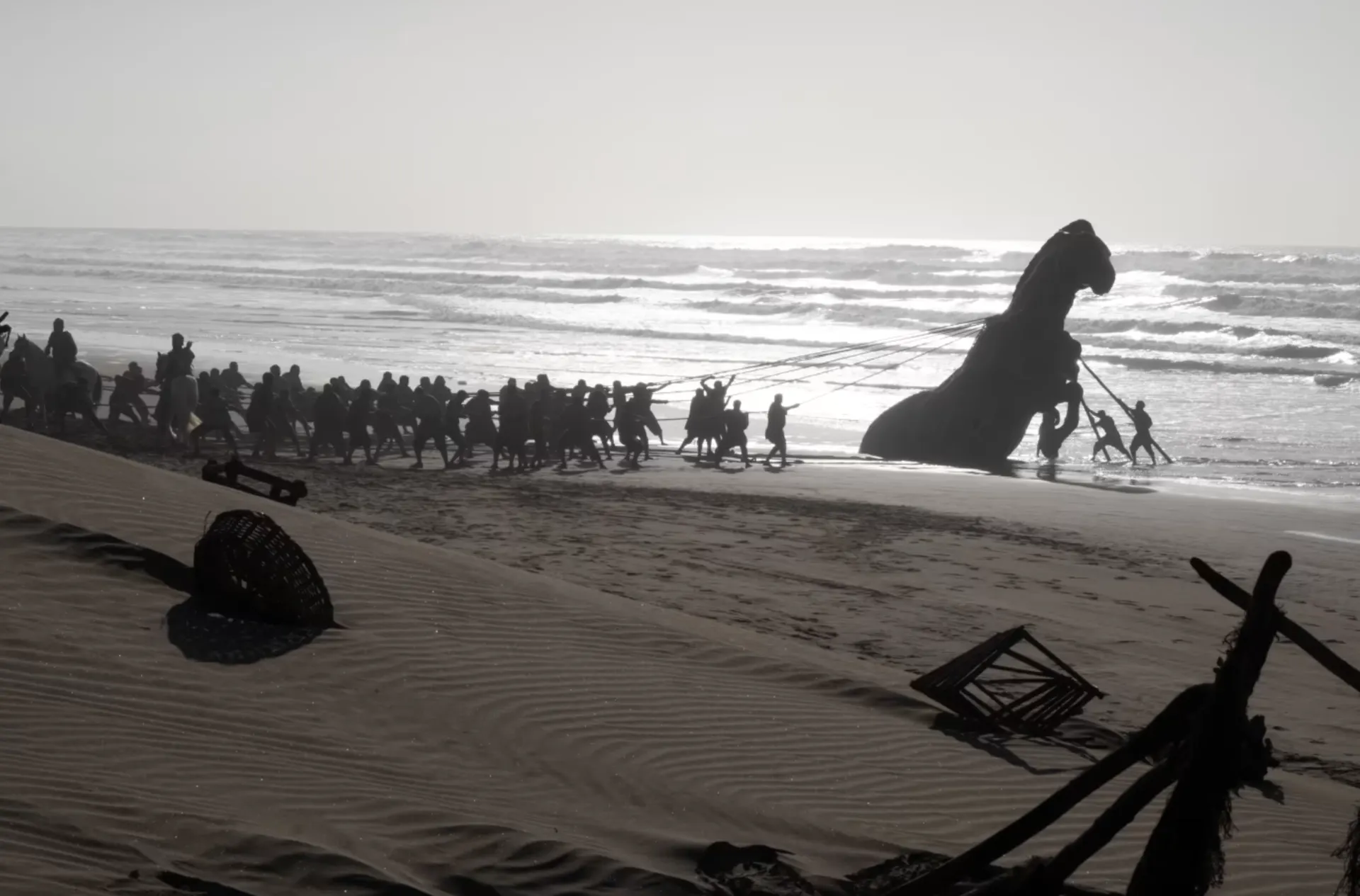
Odysseus’ self-imposed exile – evocative of the social alienation that’s so prevalent among sufferers of moral injury – keeps him away from home for 10 long years after the war ends. Yet even time and space fail to heal him, and Odysseus remains haunted by guilt and shame: “We left them a gift, an offer of peace, that they took into their home,” Damon’s Odysseus says. “We violated all that’s sacred between people.”
The warriors I have known
Nolan’s characterization of Odysseus reminds me of the veterans I have treated.
In addition to moral injury, Damon’s Odysseus almost certainly has PTSD. He has recurrent nightmares; he tries to suppress his shame by consuming memory-erasing lotus flowers; and he feels overwhelming guilt and rage. Yet he appears most distraught by the thought that a part of himself has died and is irrevocably broken. While disguised as a beggar, he utters to his wife, Penelope, “What if the Odysseus you knew lost his way?”
It’s a version of what many of the veterans I’ve treated have told me: “If you really knew me, you wouldn’t love me.”
Many of them go on to admit that they feel they are unworthy of love. Actually, it’s more than just a feeling. It’s a moral conclusion that they reach after replaying and relitigating their actions at war.

Many of my clients describe their most significant trauma as something they did or failed to do, such as shooting a civilian or hiding instead of fighting during an attack.
Trauma taking place via personal acts of commission or omission usually does not come to mind when you think of PTSD. But you can, in fact, be a war hero – as Odysseus was – and you can also become haunted by your own actions, which linger long after the war ends.
Toward healing
Effective strategies for mitigating the fear reactions that PTSD can elicit, including treatments I’ve developed, exist.
But moral injury is a different beast from PTSD, and it can be especially challenging to help someone suffering from moral injury who believes they are unlovable.
A number of therapies centered on resolving moral injury have emerged in recent years. One of those, developed by psychologist Shira Maguen, is called the “impact of killing,” and it centers on the moral and emotional aftermath of killing someone during war.
It’s seen as an especially promising tool for improving veterans’ quality of life. She finds that among veterans who had already completed traditional trauma therapy, her intervention can further bolster veterans’ willingness to take part in community events and confide in loved ones.
Some people assume “The Odyssey” has survived over the years because it is a classic story of war, resilience and homecoming. But plenty of war stories were lost to history during the illiterate centuries after the collapse of the Bronze Age. “The Odyssey” endures, I think, because it centers on a tortured hero whom the audience admires but cannot fully absolve. His cunning is entwined with his crime.
Odysseus isn’t easily redeemed, excused or pitied. As fresh waves of troops continue to be exposed to the horrors of war, Odysseus’ trauma also continues to hit home.
This article is republished from The Conversation, a nonprofit, independent news organization bringing you facts and trustworthy analysis to help you make sense of our complex world. It was written by: Amy S. Badura-Brack, Creighton University
Read more:
- Veterans, refugees and victims of war crimes are all vulnerable to PTSD
- What Greek epics taught me about the special relationship between fathers and sons
- MDMA may help treat PTSD – but beware of claims that Ecstasy is a magic bullet
Amy S. Badura-Brack does not work for, consult, own shares in or receive funding from any company or organization that would benefit from this article, and has disclosed no relevant affiliations beyond their academic appointment.
